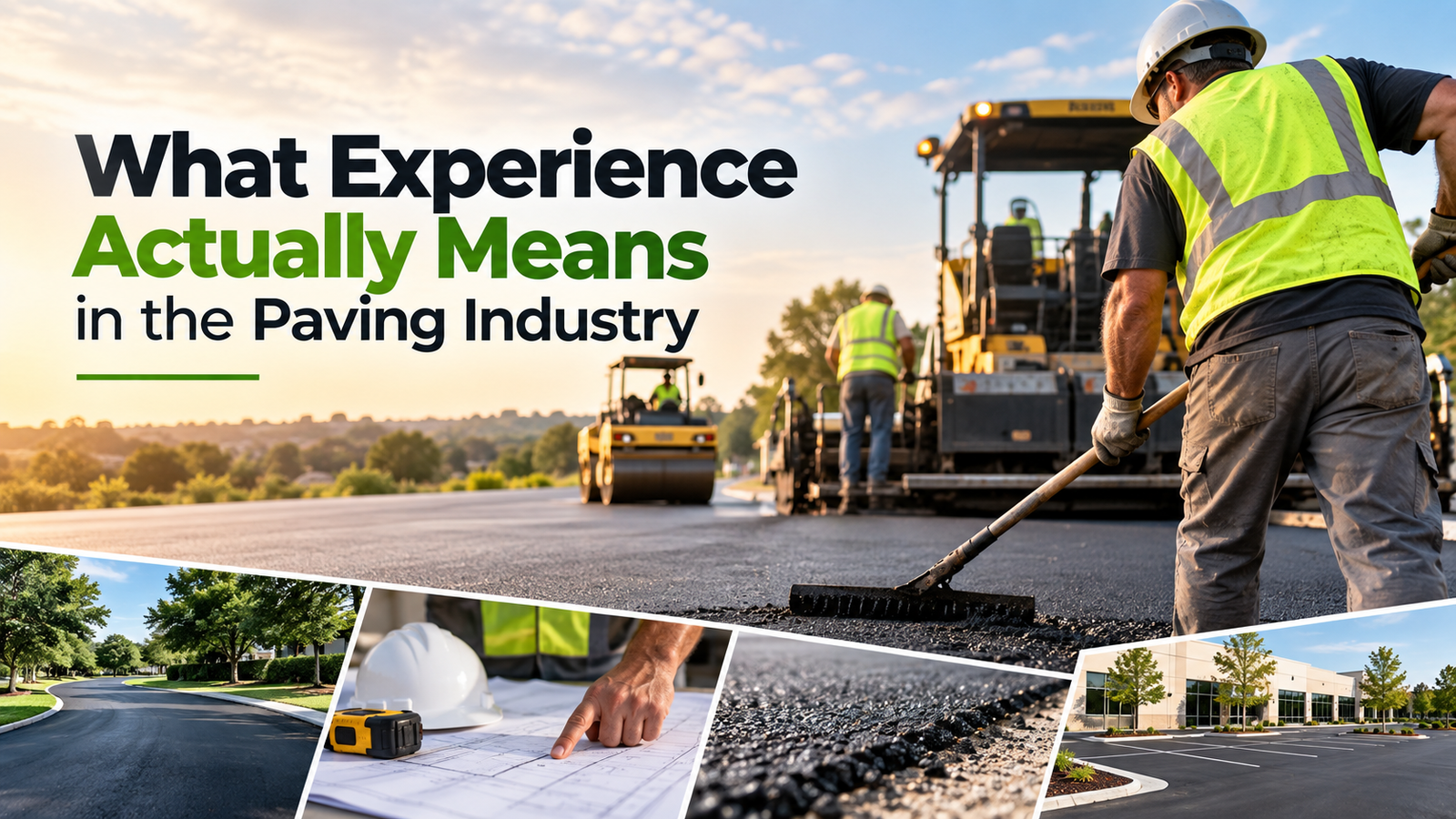
Paving and concrete work look deceptively simple from the outside: grade a surface, pour or lay material, let it set. In practice, the trade involves a layered set of skills built up through years of hands-on work across different soil types, climates, and project scales. For property owners trying to understand what separates a well-established About Victory Paving NC Midland company from a newer operation, it helps to look at what “experience” actually translates to on a job site, beyond just the number of years a business has existed.
Why Local Experience Matters More Than It Seems
Paving performance depends heavily on regional conditions. Soil composition, typical rainfall patterns, freeze-thaw frequency, and even the mix designs commonly available from local asphalt and concrete suppliers all vary by region, and a company with years of experience working specifically in an area develops a practical understanding of these local variables that’s difficult to shortcut.
In the Piedmont region of North Carolina, for example, the region’s characteristic red clay soil behaves very differently than the sandy soil found in coastal areas or the rockier terrain found in the mountains further west. Clay-heavy soil expands and contracts significantly with moisture changes, which means grading and base preparation techniques that work well in one part of the state might not hold up the same way here. A company with a long history of local projects has typically encountered these soil conditions repeatedly and adjusted its approach accordingly, whereas a company without that regional track record may be applying general techniques without the same depth of site-specific insight.
How Trade Experience Develops Over Time
Paving and concrete work involve a combination of technical knowledge and physical skill that generally develops gradually, through repeated exposure to different site conditions and project types.
Early in a career, someone in this trade typically learns the fundamentals: how to read a grading plan, how to operate compaction equipment properly, how to recognize when a base isn’t compacted enough before it’s too late to fix easily. Over time, and often across hundreds of individual projects, that knowledge deepens into pattern recognition, the ability to look at a site and anticipate drainage issues before they become visible problems, or to recognize subtle signs of soil instability that a less experienced eye might miss entirely.
This kind of experience also extends to problem-solving under unusual circumstances, such as working around existing utilities, matching new pavement to older surfaces with different elevations, or adjusting a project’s timeline around unpredictable weather, all of which come up regularly in real-world paving work but are hard to fully prepare for without having encountered similar situations before.
The Role of Industry Standards and Continuing Practices
Beyond individual experience, established paving companies typically operate within a framework of industry standards that guide material selection, installation methods, and quality control. Organizations like the National Asphalt Pavement Association (NAPA) and the American Concrete Institute (ACI) publish detailed guidelines covering everything from mix design specifications to testing procedures, and companies that have been in the trade for years tend to have these standards deeply integrated into their everyday processes rather than treating them as an occasional reference.
Staying current with evolving standards and materials also matters. Asphalt and concrete mix technology has changed over the decades, with developments like polymer-modified asphalt binders, fiber-reinforced concrete, and permeable pavement systems becoming more common as stormwater management requirements have tightened in many municipalities. A company with a long operating history has generally had the opportunity to adapt its practices as these changes have occurred, incorporating new materials and methods as they’ve proven their value.
What Equipment Investment Says About a Company
Paving requires a significant range of specialized equipment, from excavators and graders to asphalt pavers, rollers, and concrete finishing tools. Maintaining, operating, and knowing how to get the most out of this equipment is itself a skill that develops with experience.
Well-maintained, properly calibrated equipment plays a direct role in project quality. A compactor that isn’t achieving proper density, for instance, or a paver that isn’t laying asphalt at a consistent thickness, can undermine even good material and planning. Companies with a longer operating history typically have refined their equipment maintenance practices and developed a clear sense of which tools are appropriate for which types of projects, from small residential driveways to larger commercial paving jobs.
Understanding a Company’s Project History
One practical way property owners evaluate a paving company’s experience is by looking at the range and scale of past projects. A company that has handled everything from small residential driveways to larger commercial lots or subdivision roadways has typically developed a broader skill set than one that has only worked on a narrow range of project types.
Project diversity also often reflects an ability to adapt to different client needs, whether that’s coordinating with general contractors on new construction, matching an addition’s pavement to an existing surface, or working within the specific requirements of a municipal or commercial permitting process. Longevity in a competitive local market is also often, though not always, a reasonable indicator that a company has built a reputation for reliable, quality work over time, since paving projects are visible, long-lasting, and relatively easy for a community to evaluate after the fact.
Licensing, Insurance, and Accountability
Beyond hands-on experience, established companies typically maintain appropriate state licensing and insurance coverage, which matters both for legal compliance and for the practical protections it offers in the event something goes wrong during a project, whether that’s property damage or a workplace incident. These requirements exist in part because paving work involves heavy equipment, hot materials, and significant excavation, all of which carry inherent risk that responsible, established businesses plan and insure for accordingly.
How Community Involvement Reflects Long-Term Presence
Paving companies that have operated in a region for a significant period often become embedded in that community in ways that go beyond individual projects, whether through relationships with local suppliers, familiarity with municipal permitting offices, or long-standing working relationships with other trades and contractors in the area. These kinds of relationships tend to develop naturally over years of consistent local work and can translate into smoother project coordination, since a company familiar with local processes and personnel is generally better positioned to navigate the practical logistics that surround any paving project, from permitting to inspection to coordination with other on-site trades.
How Training and Skill Development Happen in the Trade
Unlike some professions with a single, standardized certification path, paving and concrete work typically involve a combination of on-the-job training, manufacturer-specific equipment certifications, and, in many cases, formal apprenticeship-style progression through increasingly complex roles. Someone entering the trade often begins with foundational tasks, learning to operate specific pieces of equipment safely and correctly, before progressing to more technical responsibilities like reading grading plans or overseeing quality control on a job site.
This gradual skill progression matters because paving work involves a combination of physical technique and judgment-based decision making that’s difficult to teach purely through classroom instruction. Recognizing, for example, whether a compacted base has reached adequate density, or whether asphalt is still within an acceptable temperature range for proper placement, often develops through repeated hands-on experience under the guidance of more experienced crew members, rather than through a single training session or certification course.
Why Consistency Across Projects Reflects Institutional Knowledge
One practical sign of an experienced paving organization is consistency: similar project types tend to be approached with a similar level of care and attention to technical detail, regardless of which specific crew or individual is handling the work. This kind of consistency generally reflects an established set of internal processes and standards that have been refined and reinforced over years of operation, rather than relying solely on the judgment of any single individual.
Documented internal procedures for tasks like compaction testing, grading verification, or material selection help ensure that institutional knowledge, built up over years of projects, gets applied consistently across a company’s work, even as specific crew members or project managers change over time. This kind of structured consistency is often harder to establish quickly and tends to develop more naturally within organizations that have operated in a specific region and trade for an extended period.
How Reputation Develops Within a Trade Community
Beyond the direct relationship between a paving company and its customers, reputation within the broader trade community, among suppliers, subcontractors, and other local contractors, also reflects a company’s accumulated track record. Suppliers who have worked with a company for years typically develop a clear sense of that company’s reliability, payment practices, and general professionalism, all of which can translate into practical benefits like priority scheduling during busy periods or more flexible arrangements when unexpected project changes arise.
Similarly, other contractors in related trades, such as general contractors, landscapers, or excavation companies, often develop informal networks of trusted partners they repeatedly recommend or coordinate with on projects that require multiple types of expertise. Being consistently included in these informal referral networks over an extended period is itself a reflection of sustained reliability and quality, since these relationships tend to erode quickly if the quality or professionalism of the work doesn’t hold up project after project.
Why Company Culture Affects On-Site Outcomes
Less visible than equipment or technical processes, but still significant, is the internal culture of a paving organization, how it trains new employees, how it handles quality issues when they arise, and how consistently it applies its own standards across different projects and crews. Companies that have operated successfully for an extended period generally have had the opportunity to develop and refine this internal culture over time, building institutional habits around safety, quality control, and customer communication that get passed down as the workforce evolves.
This kind of organizational consistency is difficult to establish quickly, and it often shows up in subtle ways, such as how a crew handles an unexpected site condition, or how consistently different crews within the same company approach similar tasks, that aren’t always obvious from the outside but tend to correlate closely with a company’s overall track record and longevity in a given market.
Frequently Asked Questions
Does a longer operating history always mean better quality work?
Not necessarily on its own, but a long track record generally does reflect accumulated experience across a wide range of site conditions and project types, along with the kind of local knowledge that’s harder to develop quickly. It’s one useful data point among several worth considering.
Why does local experience matter so much for paving specifically?
Paving performance is closely tied to regional soil, drainage, and climate conditions, all of which vary from one area to another. A company with extensive experience in a specific region has typically encountered and adapted to these local variables in ways that generalized paving knowledge alone doesn’t fully account for.
What industry standards apply to asphalt and concrete work?
Organizations like the National Asphalt Pavement Association and the American Concrete Institute publish widely referenced technical standards covering mix design, installation methods, and quality testing that guide much of the paving and concrete industry.
How does equipment quality affect the outcome of a paving project?
Properly functioning, well-calibrated equipment directly affects compaction density, surface consistency, and overall installation quality, all of which influence how long a paved surface will last before needing significant repair.
What should property owners look at when researching a local paving company’s background?
Looking at the range of past project types, how long the company has operated in the local area, and whether it maintains appropriate licensing and insurance can all provide a clearer picture of its experience and reliability.